What Happens at Closing When You Sell a Home in St. Cloud?
What Happens at Closing When You Sell a Home in St. Cloud?
Closing day is the finish line. But for many sellers, especially those who have not sold a home in years, it can feel like a black box. What actually happens? What do you need to bring? Where does your money come from and when do you get it?
Here is a plain-language walkthrough of the closing process for St. Cloud home sellers, from the moment you accept an offer to the day the keys change hands.
How Long Does the Closing Process Take in St. Cloud?
Based on June 2026 Stellar MLS data for St. Cloud, the median time from accepted offer to closing was 80 days, with an average of 97 days. Buyers who went under contract waited a median of 41 days before their contract was accepted, meaning the full timeline from list to close can run three to five months for the typical St. Cloud seller.
Cash transactions close significantly faster, often in two to three weeks. Financed purchases take longer because the lender needs time to process the loan application, order an appraisal, and complete underwriting before approving the loan.
Source: Stellar MLS, St. Cloud Single Family Residence data, June 2026.
What Happens Between Offer Acceptance and Closing?
A lot happens in those 80 days. Understanding the sequence helps you stay calm and prepared throughout the contract period.
Opening of Escrow and Earnest Money
After both parties sign the contract, the buyer's earnest money deposit is submitted to the escrow agent (usually the title company). This deposit is held until closing and applied toward the buyer's costs at that time.
Home Inspection
The buyer hires a licensed home inspector to evaluate the property. The inspection period is typically 10 to 15 days. After the inspection, the buyer may request repairs, request a credit toward closing costs, or proceed as is. You as the seller can agree to requests, counter, or decline them.
Appraisal
If the buyer is financing the purchase, the lender will order an independent appraisal to confirm the home's value supports the loan amount. If the home appraises at or above the purchase price, the process moves forward. If it comes in below, you and the buyer will need to negotiate how to handle the gap.
Loan Underwriting
The buyer's lender reviews all documentation, the appraisal, and the buyer's financial profile to issue final loan approval. This stage can include requests for additional documentation from the buyer and can take several weeks. Your closing date is often set for shortly after anticipated loan approval.
Title Search and Title Insurance
The title company conducts a search of the property's records to confirm there are no liens, claims, or title issues that would affect the transfer. In Florida, sellers typically pay for the buyer's title insurance policy, though this is negotiable. Your real estate attorney or agent will clarify what is customary in your specific transaction.
Final Walkthrough
Shortly before closing (often the day before or the morning of), the buyer does a final walkthrough to confirm the home is in the agreed condition, any negotiated repairs were made, and the property is ready for transfer.
Closing Day
Documents are signed, funds are transferred, and ownership officially changes hands. In Florida, sellers often sign closing documents separately from the buyer, sometimes in advance or with a mobile notary. Confirm the timing and format with your closing agent.
What Does a Seller Bring to Closing?
As a seller in St. Cloud, you typically need:
- A valid government-issued photo ID (driver's license or passport)
- All keys, garage door openers, gate codes, mailbox keys, and any access cards for the property
- Documentation of any repairs made during the contract period, if applicable
- HOA transfer information if the community requires it
- Warranty documentation for appliances or systems being transferred to the buyer
Your real estate agent, closing attorney, or title company will notify you of anything specific to your transaction well before closing day.
What Comes Out of Your Proceeds at Closing?
Before you receive your net proceeds, several items are paid from the sale amount:
- Remaining mortgage balance. If you still have a mortgage, the payoff amount is calculated and sent directly to your lender at closing. You do not need to pay this separately.
- Real estate agent commissions. The total commission is distributed from the proceeds per your listing agreement.
- Seller's title insurance policy. In most Osceola County and St. Cloud transactions, the seller pays for the owner's title policy.
- Documentary stamp taxes. Florida charges a documentary stamp tax on the deed, typically paid by the seller.
- Prorated property taxes. You pay taxes for the portion of the year you owned the home. This is calculated at closing.
- HOA fees and transfer charges. Many St. Cloud communities including Weslyn Park and Del Webb Sunbridge have HOA transfer fees that are settled at closing.
- Any agreed seller concessions. If you agreed to cover any of the buyer's closing costs during negotiation, those come out here as well.
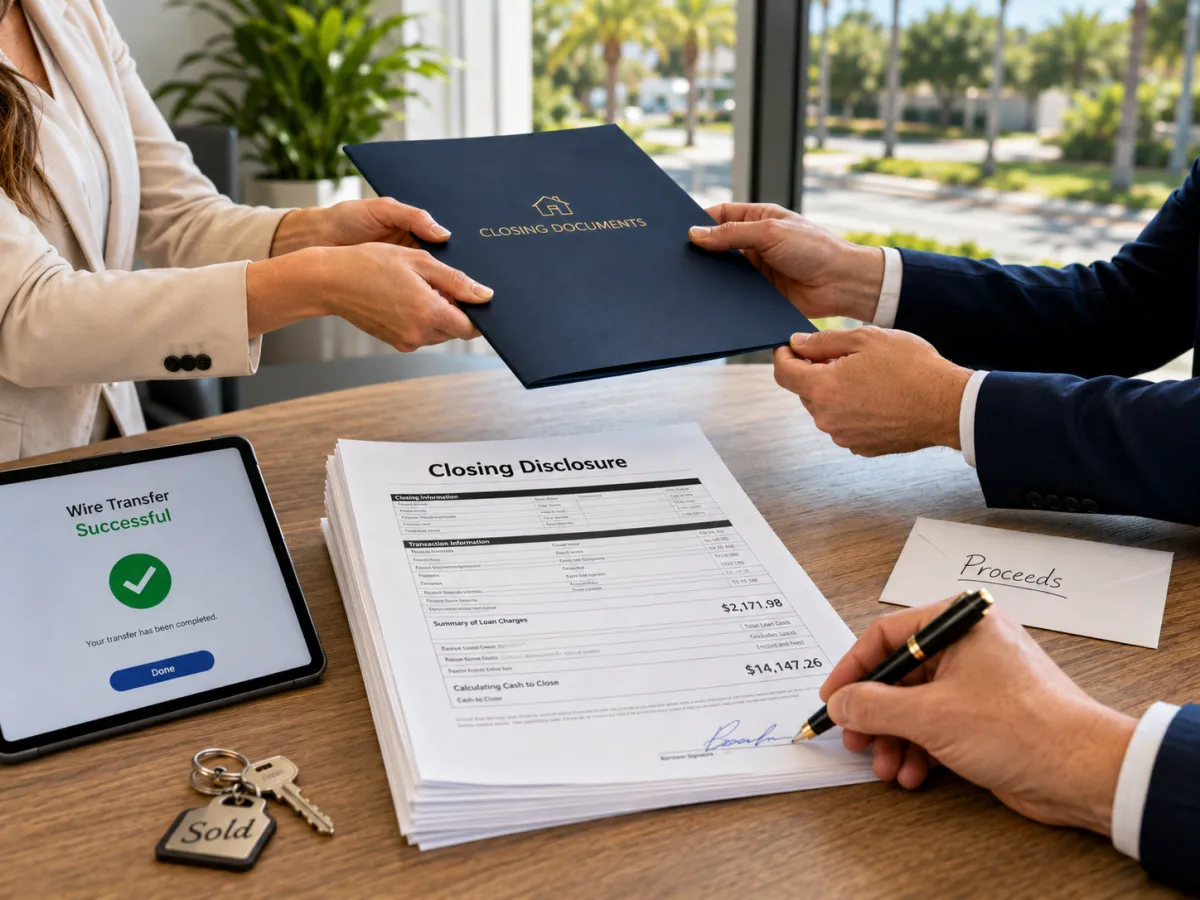
Before closing, you will receive a Closing Disclosure that itemizes every cost and credit. Review this document carefully with your agent or attorney. It tells you exactly what your net proceeds will be.
One thing I always walk my sellers through before closing is the net sheet, which shows exactly what you will walk away with after every cost. No surprises. When you understand the numbers ahead of time, closing day feels like a milestone rather than a mystery.
When Do You Get Your Money?
In most St. Cloud transactions, sellers receive their net proceeds on the day of closing or the next business day, via wire transfer or check. The exact timing depends on when funds are officially disbursed by the title company. Confirm the disbursement method and timeline with your closing agent so you know when to expect the funds.
What Happens to Your Mortgage?
Your mortgage is paid off directly from the sale proceeds at closing. The title company contacts your lender in advance to obtain the exact payoff amount, which includes any remaining principal, accrued interest, and any applicable fees. You do not need to coordinate a separate payment. The payoff is handled entirely through the closing process.
If you owe more on your mortgage than the home will sell for, that is a different situation called a short sale, which requires separate lender approval. For most St. Cloud sellers who have owned their home for several years and have been building equity, this situation is uncommon.
For more on the St. Cloud selling process, read How Long Does It Take to Sell a Home in St. Cloud Florida? and How to Negotiate Offers on Your St. Cloud Home.
And if you are comparing what the St. Cloud market looks like relative to Lake Nona, How Does the St. Cloud Real Estate Market Compare to Lake Nona? breaks it down clearly.
Ready to Talk Through What Selling Looks Like for Your St. Cloud Home?
Whether you are six months out or just starting to think about it, a free seller strategy session gives you a clear picture of the process, your timeline, and what you can realistically expect to walk away with.
Get a Free Seller Strategy SessionFrequently Asked Questions
How long does it take to close on a home sale in St. Cloud Florida?
Based on June 2026 Stellar MLS data for St. Cloud, the median time from accepted offer to closing was 80 days, with an average of 97 days. Cash transactions close faster, often in two to three weeks. Financed purchases take longer due to the loan underwriting process.
What documents do I need to bring to closing when selling my St. Cloud home?
Sellers typically need a valid government-issued photo ID, all keys and access items for the property, and documentation of any agreed repairs. Your closing agent will handle the legal documents. Bring HOA transfer information and any appliance or system warranties being transferred to the buyer.
What costs come out of the sale proceeds at closing in St. Cloud?
Seller closing costs typically include real estate agent commissions, the seller's title insurance policy, documentary stamp taxes on the deed, any remaining mortgage balance payoff, HOA transfer fees if applicable, prorated property taxes, and any agreed seller concessions. Your Closing Disclosure will itemize all of these before closing day.
Do I need to be present at closing when selling my St. Cloud home?
In Florida, sellers often have the option to sign closing documents in advance with a notary or via a mobile notary rather than attending in person. This is sometimes called a mail-away closing. Confirm the process with your closing agent and real estate agent early in the contract period.
What happens to my existing mortgage when I sell my St. Cloud home?
Your existing mortgage is paid off at closing using proceeds from the sale. The title company coordinates the payoff directly with your lender using an exact payoff amount obtained in advance. You do not need to make a separate payment. If you owe more than the sale price, a short sale process applies and requires lender involvement.
When do I get my money after selling my St. Cloud home?
In most St. Cloud home sales, sellers receive their net proceeds on the day of closing or the following business day via wire transfer or check, after all payoffs and closing costs are settled. Confirm the timing and disbursement method with your title company or closing agent ahead of closing day.