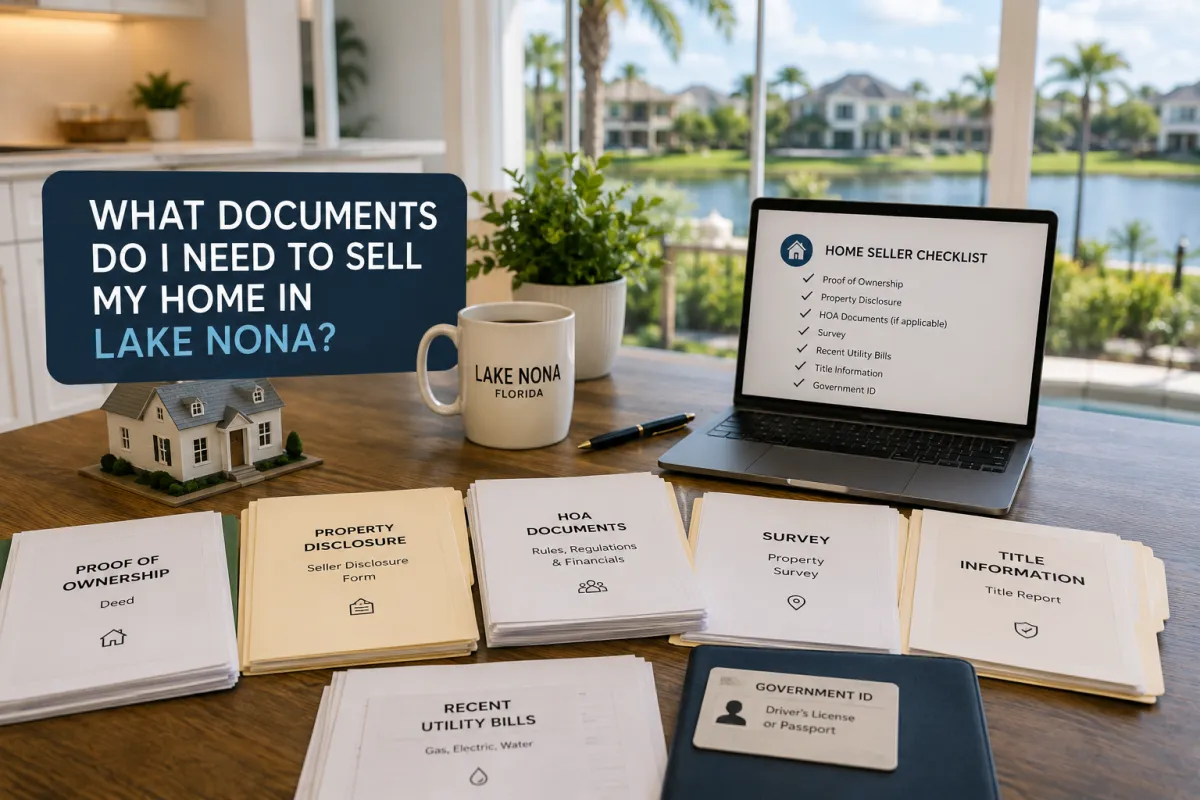
What Documents Do I Need to Sell My Home in Lake Nona?
What Documents Do I Need to Sell My Home in Lake Nona?
One of the questions I hear from sellers right at the beginning of the process is: what papers do I actually need to get together?
It is a smart question. The paperwork side of selling a home in Lake Nona is not complicated if you know what to expect. But if you wait until you are under contract to start gathering everything, you will feel rushed, and some items take longer to get than most people realize.
Here is a clear breakdown of everything you will need, organized by when you need it in the process. Keep this as a checklist and work through it before your listing goes live.
Phase 1: Documents You Need Before You List
These are the items your agent will need from you early in the process and that you want to have organized before any buyer sets foot in your home.
Government-Issued Photo ID
Your driver's license or passport. You will need this at closing, but have it ready from the start. If more than one person is on the deed, all parties need valid ID.
Property Deed or Title
Your original deed confirms you own the property and identifies how title is held. If you cannot locate it, the title company will pull it from Orange County public records, but having it on hand speeds things up. For Sunbridge or St. Cloud homes it would be in Osceola County records.
HOA Documents
This is one of the most important items for Lake Nona sellers. Most communities here have an HOA. You will need to provide: current CC&Rs (Covenants, Conditions, and Restrictions), HOA bylaws, most recent financial statements, rules and regulations, and an HOA estoppel letter. The estoppel letter shows the buyer your current dues balance and any outstanding assessments. Request this as early as possible because it can take 10 to 14 business days and usually costs a fee paid by the seller.
Current Mortgage Statement
Your most recent statement showing your lender, loan number, and approximate balance. You will need a formal payoff statement closer to closing, but having the statement on hand helps your agent and the title company with early planning.
Property Tax Receipts
Your most recent annual property tax bill. This helps buyers understand their carrying costs and is referenced at closing when taxes are prorated.
Permits for Any Work Done on the Home
If you added a room, enclosed a garage, built a pool, or made any structural changes since you bought the home, find the permits. Unpermitted work can become an issue during buyer inspection and can affect financing. Having permits ready, or knowing what work was done without permits, lets you address this proactively.
Existing Survey (if available)
Not always required, but if you have a survey from when you purchased the home, it can save the buyer the cost of ordering a new one and can speed up the transaction.
Previous Inspection Reports
If you had an inspection done when you bought the home or had a pre-listing inspection done recently, this can help you demonstrate transparency and address any issues before a buyer's inspector finds them.
Phase 2: Documents Needed Once You Are Under Contract
Once a buyer makes an offer and you accept, several additional documents come into play. Your agent will guide you through these, but knowing what is coming removes surprises.
Florida Seller's Property Disclosure
Florida law requires sellers to disclose all known material facts about the property. This is not optional. You will complete a multi-page form covering: roof age and any known leaks, HVAC age and condition, water heater age, any history of water intrusion or mold, known plumbing or electrical issues, HOA disputes or pending assessments, presence of lead-based paint if built before 1978, and any other issues a buyer would reasonably want to know. Be accurate and complete. Failing to disclose known problems can lead to legal disputes after closing.
Lead-Based Paint Disclosure
Required by federal law for homes built before 1978. Most Lake Nona homes are newer construction, but if your home was built before 1978, this form is mandatory. Your agent will provide it as part of the contract package.
HOA Addendum
Confirms the HOA details, fees, and buyer's acknowledgment of the HOA rules. Your agent prepares this, but the estoppel letter from Phase 1 feeds directly into it.
Formal Mortgage Payoff Statement
Your lender will issue a payoff statement good through a specific date. The title company uses this to ensure your mortgage is fully paid at closing and the lien is released. Request this once you have a confirmed closing date.
Phase 3: What You Need at the Closing Table
Closing in Florida is typically handled by a title company or real estate attorney. As the seller, your role at closing is relatively simple once the paperwork has been prepared.
Bring to Closing:
The title company prepares the closing disclosure, deed, and settlement statement. You will review and sign these documents. Your agent or an attorney can review the closing disclosure with you ahead of time so there are no surprises at the table.
The document that trips up sellers most often is the HOA estoppel letter. People do not realize it takes nearly two weeks and costs money. I always tell my sellers to request this the moment we have a firm listing date, not after we get an offer. Waiting until you are under contract puts pressure on everyone's timeline and can delay closing. Get it early. It makes everything smoother.
What Your Agent Handles vs. What You Provide
You do not need to understand or prepare every document yourself. Your agent handles the paperwork side of the transaction. What you are responsible for is gathering and providing the items listed above.
Here is a simple way to think about it:
- You gather: your personal and property records, HOA documents, permits, and tax information
- Your agent prepares: the listing agreement, MLS data, disclosures, offer forms, addenda, and contract
- The title company prepares: the closing disclosure, deed transfer, settlement statement, and coordinates the payoff of your mortgage
The cleaner your records and the more organized you are before the listing goes live, the smoother the entire process will be.
For a deeper look at what happens at the closing table, see our guide: What Happens at Closing When You Sell a Home in Lake Nona?
If you want to understand the full cost picture of selling, including doc stamps, title insurance, and HOA estoppel fees, read: What Are Closing Costs for Sellers in Lake Nona Florida?
And if you still have a mortgage on the property you are selling, this guide explains exactly how that works: How to Sell Your Lake Nona Home If You Still Have a Mortgage.
Frequently Asked Questions
Ready to get your Lake Nona home sold the right way? Let's build your plan, starting with a complete picture of your next steps.
Get a Free Seller Strategy SessionRelated reading: Complete Lake Nona Home Seller Guide for 2026 • What Does It Cost to Sell a Home in Lake Nona? • What to Do 90 Days Before Listing Your Lake Nona Home